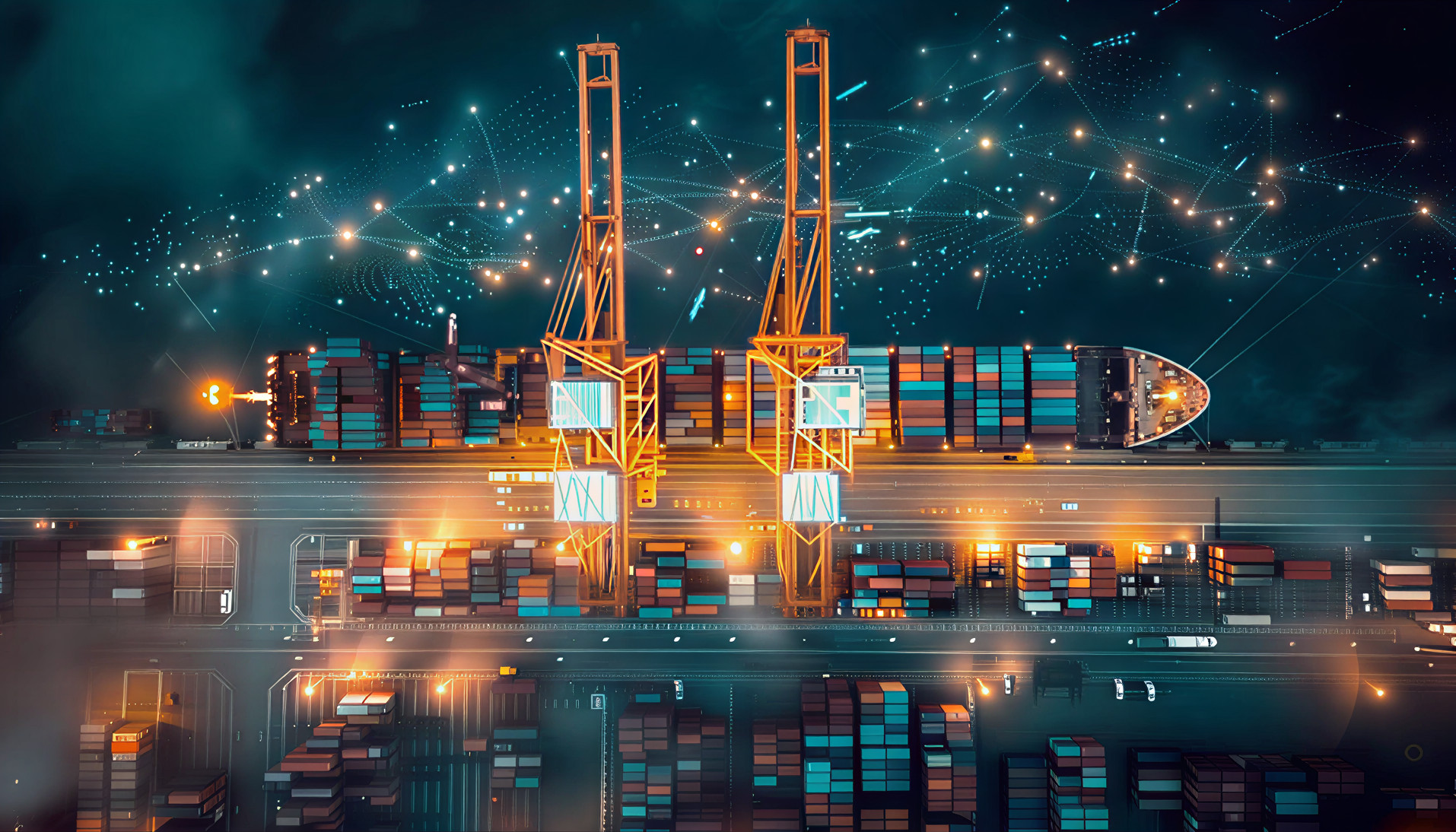
Artificial intelligence is reshaping global logistics in 2026 by making air and sea freight operations more predictive, autonomous, and efficient. Machine learning now powers real-time route simulation, demand forecasting, and dynamic cargo routing. Automation—from robotic warehouses to AI-managed port terminals—is reducing costs while increasing throughput. Generative AI is streamlining cross-border documentation, cutting processing time by up to 60%. Together, these technologies are shifting the logistics industry from reactive firefighting to proactive, intelligent operations across the entire global supply chain.
In today’s supply chain landscape, AI enables a decisive shift from reactive management to predictive logistics. Advanced forecasting models analyze thousands of variables—traffic, weather, fuel prices, demand signals—on a rolling basis. Amazon.com saw a 15× increase in forecasting accuracy after automating 80–90%of its demand planning (wns.com).
Modern AI systems can instantly evaluate thousands of routepermutations, helping companies optimize delivery times, labor, andcapacity (pymnts.com). As PYMNTS notes, these systems can “replanentire networks in minutes,” dynamically rerouting shipments whencongestion, port delays, or disruption risks emerge (pymnts.com).
Instead of over-relying on safety stock or high-cost buffers,logistics leaders are now building agile, data-driven responsemodels. Predictive analytics gives shippers the visibility to balancecost, speed, and service—across oceans, time zones, and borders.
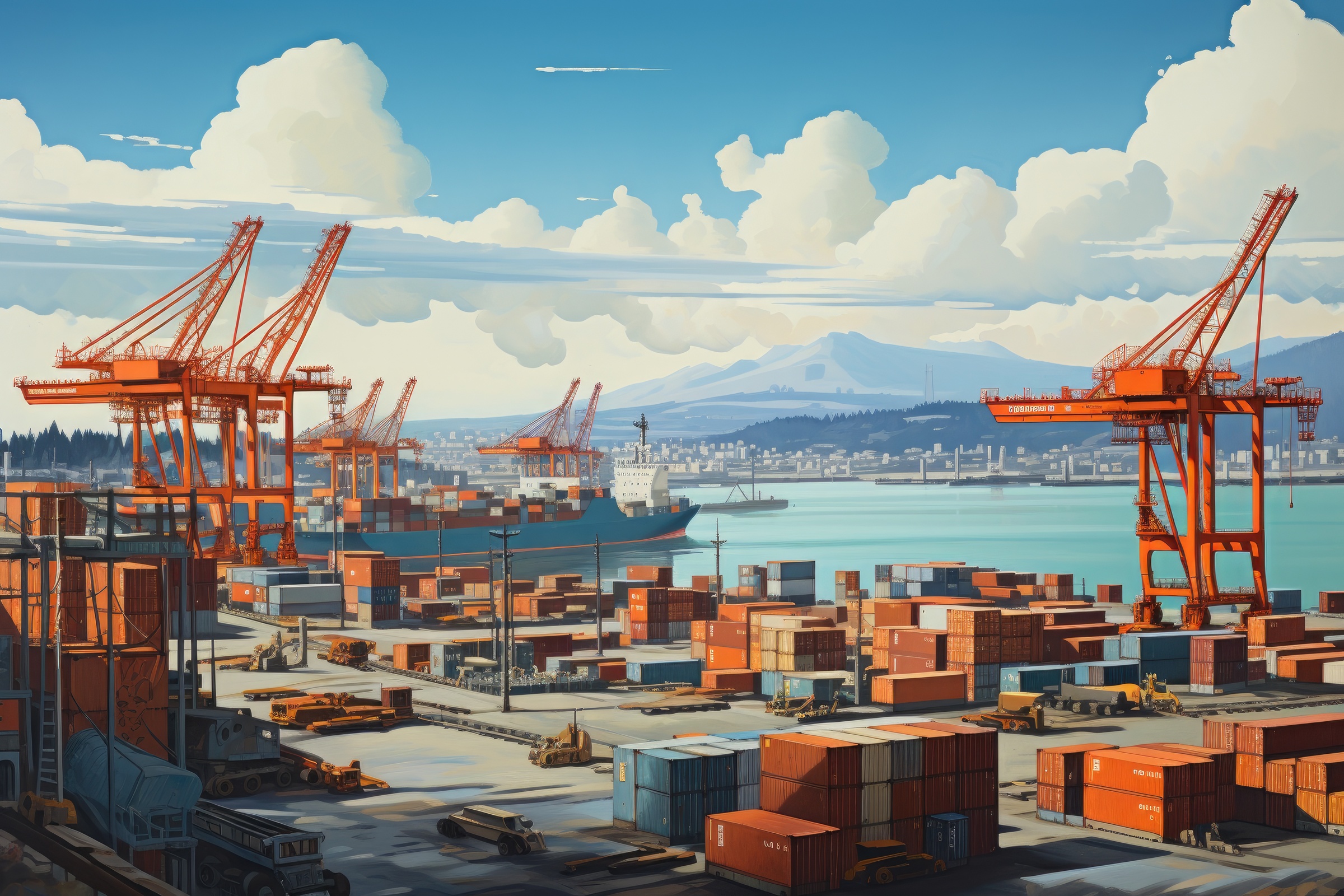
Automation is advancing rapidly in the physical world. Across Asiaand beyond, ports and warehouses are evolving into smartlogistics ecosystems. In Taiwan, for instance, AI-basedtruck recognition systems have reduced gate clearance times from fourminutes to just 10 seconds (twport.com.tw). In China, fully automatedcontainer terminals run on digital twin simulations, IoT sensors, andunmanned yard vehicles—cutting labor needs by 60% and operationalcosts by nearly 30% (piernext.portdebarcelona.cat).
Evergreen Marine launched Taiwan’s first AI-powered, fullyautomated terminal and conducted a 10,000 km autonomous navigationtrial by 2025 (enkiai.com). Meanwhile, airports and cargo carriersare deploying AI-guided vehicles, autonomous drones, and roboticsortation systems for ground handling and last-mile tasks.
The rise of agentic AI takes things a stepfurther: AI not only recommends adjustments—it acts. Thesemulti-agent systems autonomously reassign routes, dispatch vehicles,and update schedules via natural-language interfaces (pymnts.com).Human roles are shifting toward strategy and oversight, while routineexecution becomes self-optimizing.
Routing is no longer static. Today’s freight strategies rely onreal-time, multimodal optimization across sea, air,rail, and road. Generative AI platforms now consider variables likeweather, energy consumption, vessel capacity, and risk factors to mapoptimal routes (maersk.com).
Air cargo teams use dynamic AI routing to fully utilize bellyholdspace and respond to sudden demand shifts. With access to integratedglobal data, AI engines can rebalance loads between transport modesmid-transit to avoid delays or reduce costs (pymnts.com, wns.com).
Industry leaders like Kuehne+Nagel have adopted these tools todynamically price and route freight, accelerating time-to-marketwhile maximizing asset utilization (stattimes.com). AI enables aself-aware logistics network—constantly learning, adjusting, andimproving performance in motion.
Customs and trade paperwork have long been bottlenecks. Now, AIis radically improving speed and compliance. OCR and RPAtools instantly parse shipping documents and invoice data(pymnts.com). Virtual agents can auto-fill customs declarations,verify rules, and submit filings to government systems without humanintervention (wns.com).
McKinsey reports that generative AI can reduce document processingtime by 60%, while also flagging errors and ensuring compliance(mckinsey.com). Metro Shipping, for example, used AI to handlecomplex post-Brexit declarations, reducing time and risk acrossthousands of shipments (wns.com).
This evolution transforms customs from a manual, reactive processinto an integrated, almost real-time function—essential for speedand scale in global freight.
Built by Worldtop & Meta, TradeXchange turnsuncertainty into strategic advantage.
TradeXchange is an AI-powered, data-driven manufacturingintelligence platform designed to help companies navigate today’sincreasingly complex global supply chain environment with clarity andconfidence. It enables procurement and supply chain teams to analyzetariff exposure, ESG performance, geopolitical risk, andmanufacturing value across countries—then identify and compareverified manufacturers backed by real export data.
By unifying scenario analysis, supplier discovery, and report generation, TradeXchange replaces fragmented tools and guesswork with a single, intelligent decision system—helping organizations build more resilient, proactive, and future-ready sourcing strategies.