How geopolitics, carrier strategy, and risk realities shape the slow return of container traffic through the Red Sea
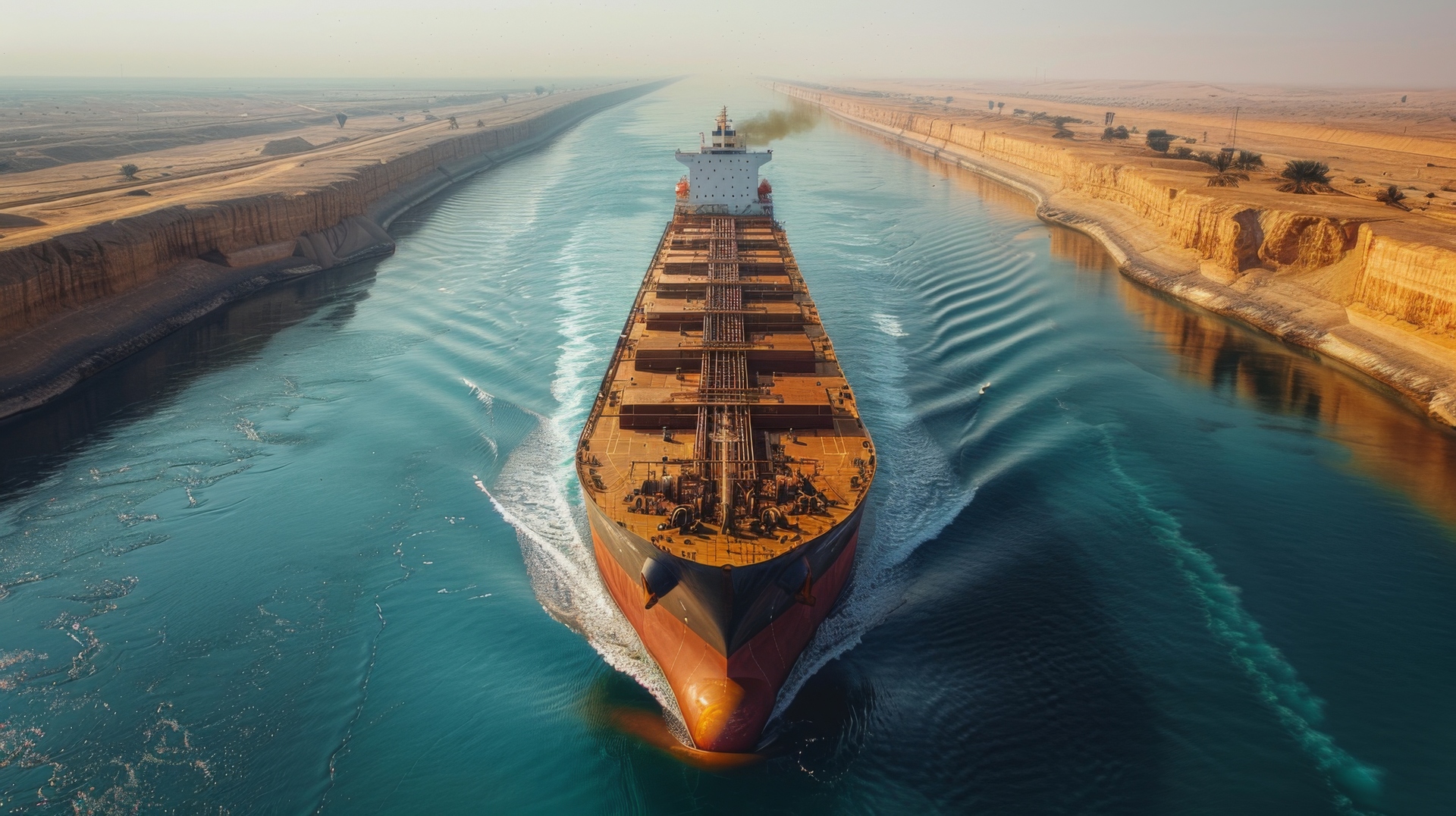
Commercial container traffic has been largely absent from the Suez Canal for nearly two years — a dramatic rerouting driven by Houthi attacks that forced carriers to detour around Africa. As diplomatic progress hints at renewed stability, the possibility of returning to the Red Sea is emerging. But the path back is far from straightforward.
This analysis unpacks the geopolitical triggers, commercial hesitations, and operational risks shaping one of the most consequential route decisions in global shipping.
Egypt, whose economy relies heavily on Suez Canal revenues, has lost billions across two years of diversions. President Abdel FattahEl-Sisi is urging a return to normal canal operations, reinforced by diplomatic momentum from the October Israel-Hamas peace summit in Sharm El-Sheikh.
The Suez Canal Authority stated that the summit “paved the way” for restoring normal traffic.
However, the commercial response was immediate and skeptical. When the SCA suggested Maersk planned December resumption, the carrier quickly denied having set any timeline.
This highlights a widening gap:
Governments want apolitical win; carriers need operational certainty.
Executives at global carriers acknowledge the Suez Canal’s strategic importance. CMA CGM has reiterated that “there is no alternative” to the canal for Asia–Europe trade.
Yet, resuming transits requires a full network reconfiguration —vessel rotations, transshipment hubs, alliances, equipment flows —changes carriers are unwilling to reverse again if attacks resume.
Their assessment: Too little has changed to justify returning.
S&P Global’s analysts warn that the Houthi pause is likely temporary, noting the group may be using the ceasefire to rearm and rebuild. They foresee a “severe risk of attacks” over the next year if the Israel–Hamas ceasefire collapses — a likely scenario.
That uncertainty alone is enough to keep vessels on the Cape of Good Hope route.
According to security assessments, the Houthi movement has clear incentives to maintain — or resume — attacks:
Stopping attacks permanently would reduce their bargaining power. Therefore, partial or temporary pauses are more realistic than a true end to the threat.
If Washington decides that Suez diversions are contributing to inflation (even though economists see no evidence of this), the White House may apply diplomatic pressure on carriers.
Possible tools being discussed:
But carriers emphasize that no amount of political pressure will override safety risks. If the U.S. attempted penalties for avoiding Suez transits, carriers would push back.
As one industry executive put it:
“I don’t see a world where they risk the safety of their people and fleets because of a port fee.”
Reopening the Suez at full scale would release approximately 10%of global container capacity back onto east-west trades.
Effects could include:
Carriers are aware that an abrupt glut of capacity could push rates lower — an implicit disincentive to speeding the return.
Even with diplomatic momentum, operational realities mean carriers will move cautiously.
Shippers should negotiate options for:
Even if Suez reopens, intermittent disruptions or renewed attacks may cause temporary closures.
Forwarders and NVOs with real-time intelligence and contingency planning — such as Worldtop & Meta — will play a critical role.
The Suez reopening debate connects to several macro forces shaping global freight:
As 2026 approaches, logistics teams are increasingly expected to interpret political risk as part of operational planning — not as an external factor.
The return to the Suez Canal will not be linear. Government pressure, Middle East diplomacy, and Egypt’s financial urgency are colliding with carriers’ operational caution, safety concerns, and market economics.
For global shippers, the key is preparing for uncertainty rather than betting on a rapid normalization. Flexibility, scenario planning, and trusted partners will define resilient supply chains in 2026.