TL;DR: A surge in Chinese-sourced data center hardware is offsetting a forecast 3-5% monthly decline in consumer imports from August through November, keeping trans-Pacific volumes elevated into peak season. But the July 24 tariff cliff and a fast-growing wave of state-level data center moratoriums, starting with New York's, mean this "steady" demand pillar carries more near-term uncertainty than the headline volume numbers suggest.
The trans-Pacific is having what looks like a strong peak season. It isn't, not evenly. Retailers frontloaded fall and holiday merchandise ahead of the July 24 tariff deadline, which is why the National Retail Federation expects July imports to hit a monthly record. The same NRF forecast calls for year-over-year declines of 3%to 5% every month from August through November. That's the consumer side of the ledger, and it's cooling.
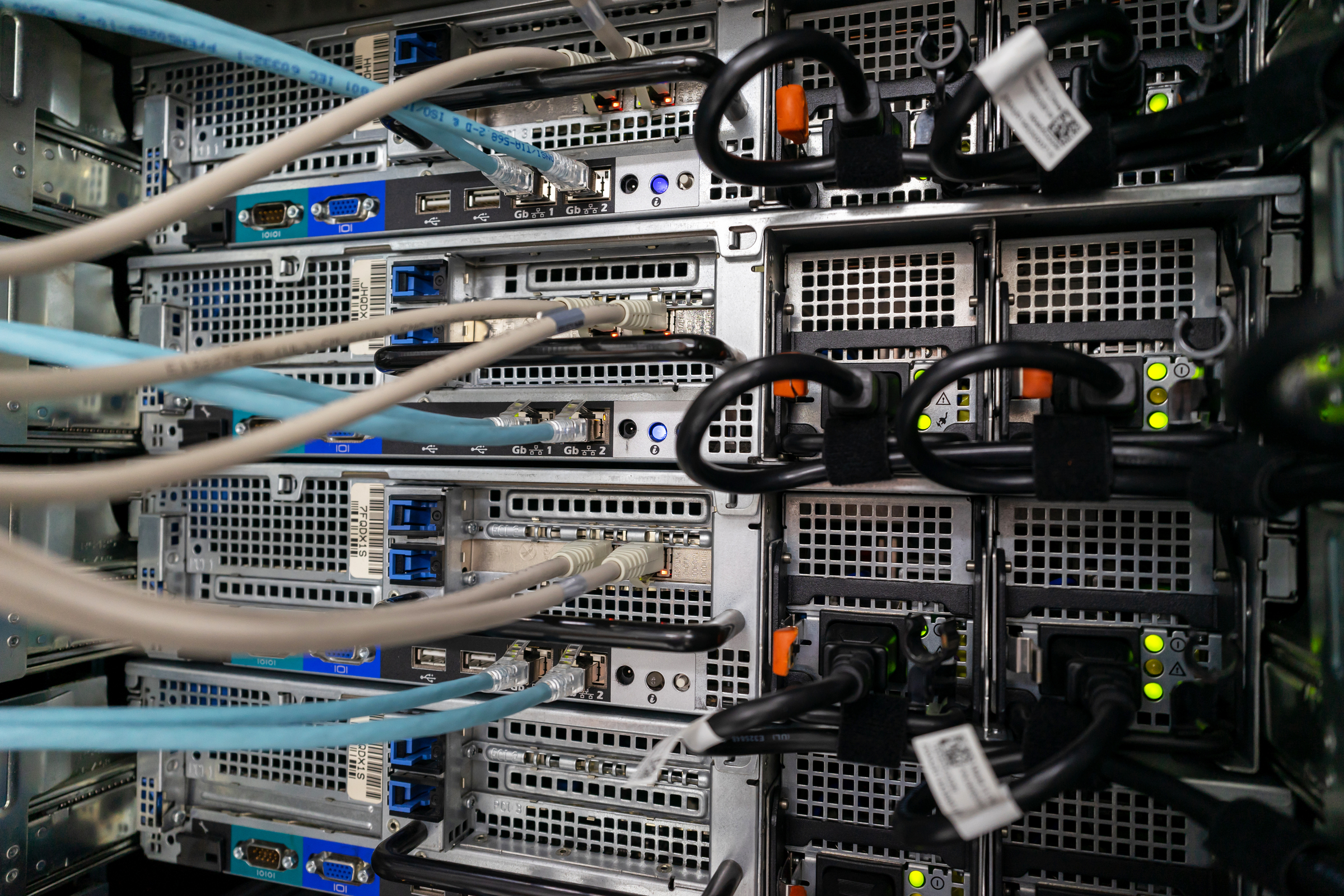
What's filling the gap is a different kind of cargo entirely. Materials and equipment for data center construction, power infrastructure, cooling systems, networking gear, and IT hardware, moved 817,317 TEUs into the US in the first half of this year, up 55%from 526,425 TEUs in the same period of 2023, according to PIERS data. Most of it ships from China. US data center capital spending hit a record $59.3 billion in the first quarter, up 26.4% year over year, per the Census Bureau.
For anyone benchmarking trans-Pacific health off one blended volume chart, that gap matters. Consumer importers benchmarking their own rate expectations against "peak season is strong" headlines are working from a number that doesn't describe their cargo. Sea-Intelligence founder Alan Murphy put it plainly in his Sunday Spotlight newsletter, citing an IMF report: trade momentum is split between fast-growing tech exporters and softening consumer hubs. Two markets, one trade lane, one misleading average.
The JOC article notes tariff changes take effect July 24 without spelling out what actually changes, and that gap is worth closing, because the mechanics matter for anyone with cargo on the water right now.
The 10% flat surcharge currently applied under Section 122 of the Trade Act of 1974 was Washington's stopgap after the Supreme Court struck down the prior IEEPA tariffs in February. Section 122 caps emergency surcharges at 150 days, and that clock runs out July 24.Congress hasn't acted to extend it, and there's no unilateral path to renew it. What replaces it is still being finalized: USTR proposed Section 301 duties of 10% to 12.5% on roughly 46 to 60 trading partners following a forced-labor enforcement investigation, with a completion deadline that lands right at the Section 122 sunset. If that action finalizes on schedule, most affected importers see a modest rate increase. If it slips, rates could temporarily revert topre-2025 baseline levels (MFN plus existing Section 232 and 301duties) until a replacement lands.
Three distinct outcomes are live at once: a finalized 12.5% regime, a temporary reversion to older baseline rates, or a partial, delayed rollout with exemptions still being worked out. None of that is confirmed as we publish this. Any landed-cost model built on "10%surcharge" as a stable assumption needs a rebuild this week, not next month.
One forwarder adviser quoted in the original reporting called the industrial import surge "not a seasonal thing," predicting it holds steady for three years. That may prove right. But it treats a politically contested, capital-intensive construction boom as though it were a fixed feature of the trade lane, and the ground underneath it is shifting faster than that framing allows for.
New York became the first state to impose a state wide moratorium on large data centers on July 14, when Governor Kathy Hochul signed an executive order pausing state permits for facilities of 50megawatts or more for up to a year, while regulators study grid strain, water use, and utility costs. Lawmakers in at least ten other states, including Virginia, Georgia, Maryland, Michigan, and Pennsylvania, have introduced similar restrictions or voiced opposition. S&P Global Energy tracks at least 64 US data center projects, representing about 29 gigawatts of potential capacity, that have already been canceled, rejected, or withdrawn amid local pushback.
None of this stops the buildout. It does mean the import pipeline behind it runs through a permitting and political environment that's visibly more contested than it was even six months ago. Teams treating data-center-linked freight as a locked-in, multi-year volume floor should build a downside case, not just the upside one.
Spot rates gave their first real signal that frontload momentum is fading. The Asia-to-US-West-Coast rate fell 12% week over week to$6,450 per FEU as of July 14, the first weekly decline since late April. The East Coast rate dropped 11% to $7,900 per FEU. Carriers added extra-loader vessels over the past month to absorb frontloaded volume, and some are now discounting into the low $6,000s per FEU to fill that capacity, according to a carrier source cited in the original reporting. Larger alliance carriers have extended current rates through July 31, suggesting even they expect the picture to look different in August.
Industrial cargo is real and load-bearing, and it's kept rates from collapsing outright even as retail frontloading fades. But it's a different commodity mix, often moving on different service strings and equipment types than seasonal consumer freight, which means capacity that's positioned for data center hardware doesn't automatically translate into available space or competitive rates fora general merchandise importer in September.
A few things are worth doing this week rather than waiting for the next data point:
The peak season narrative holding up the trans-Pacific right now is real. It's just carrying two distinct trade lanes on one chart. Know which one your cargo sits in, and how exposed it is to a tariff decision and a regulatory backlash landing in the same month. That's the difference between reacting to next quarter's numbers and planning for them now.
Source:https://www.joc.com/article/data-center-linked-cargo-keeps-peak-season-alive-on-trans-pacific-6254095