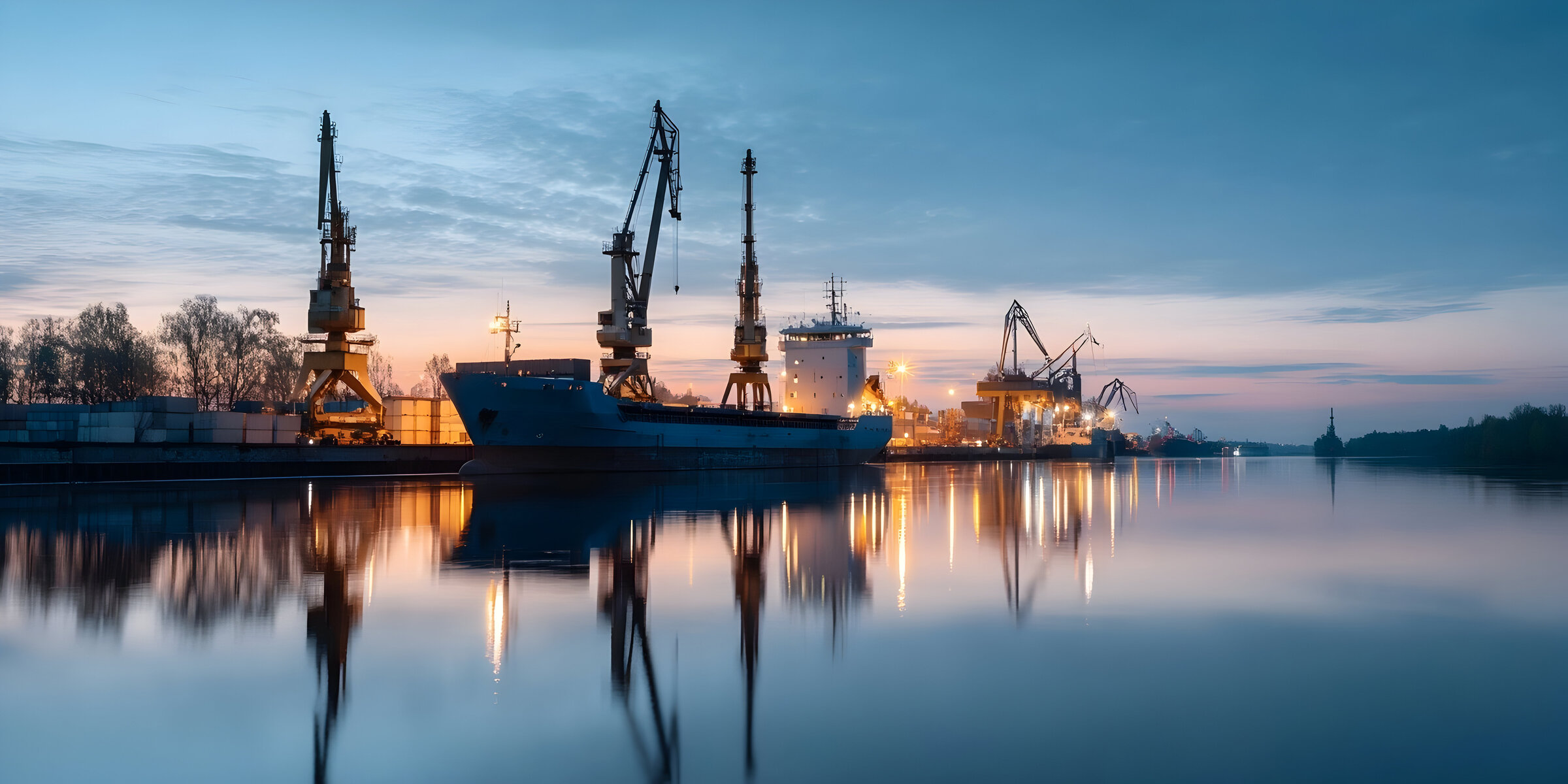
The Port of Houston just secured expedited federal permitting fora possible third container terminal, a project it openly says won't be needed for ten years. The number worth tracking isn't the 2036terminal. It's whether Bayport's 2028 expansion and a ship channel still capped near 46 feet can absorb the 10% import growth Houston is already seeing from Asia.
Port Houston just did something ports rarely do this early: it filed federal permitting paperwork for infrastructure it says it won't need for a decade. On July 8, a coalition of federal agencies led by the US Army Corps of Engineers granted the Barbours Cut North Expansion project — a potential third container terminal on Spilman Island — expedited review status under the FAST Act. That's a real, verifiable action. What it means for shippers routing cargo through the Gulf Coast is a different question entirely, and the honest answer is: not much, not yet.
Port of Houston Authority Chief Operating Officer Eric Casey was straightforward about the timeline: the terminal isn't needed for ten years, but the application had to go in now because permitting, geotechnical work, and engineering studies simply take that long. That's the actual lesson for anyone planning port infrastructure exposure. The lag between "we need capacity" and "capacity exists" in US container terminal development is now measured in a decade or more, and permitting is the long pole, not construction. Houston is filing today for a problem it expects to have in themid-2030s. Shippers building routing strategy on the assumption that ports respond quickly to demand signals should recalibrate that assumption.
It's also worth being precise about what was actually approved. FAST Act designation speeds up the review process across permitting agencies. It is not a construction permit, a funding commitment, or a confirmed site. Casey himself said Spilman Island is one of several locations still under commercial review. Treat this as a procedural milestone, not a groundbreaking.
The terminal that actually matters for anyone shipping through Houston in the next three years already has a completion date. Bayport's third-phase expansion, underway since March, adds two berths — enough to handle five super-post-Panamax vessels simultaneously — plus 100 acres of yard space, targeted for 2028.Barbours Cut is running a parallel renovation through the same year: reinforced berths and larger cranes built for super-post-Panamax ships. Combined, Bayport and Barbours Cut will carry a nominal 8million TEU capacity at full buildout. The proposed third terminal, by contrast, is scoped at 4 million TEU and would arrive in phases starting roughly a decade out.
That gap matters because Houston's Asia import volume isn't waiting. Through May, the port handled 502,387 TEUs in container imports from Asia, up 10% year over year, according to PIERS data cited in the original reporting. Larger ships are already showing up faster than the infrastructure built for them: nine vessels over10,000 TEU capacity called Houston in the first half of 2026, more than double the four that called in the second half of 2025. If that growth curve holds, the pressure point isn't a decade away. It's whichever quarter between now and 2028 when Bayport's new berths aren't yet online and current terminals are absorbing both volume growth and larger call sizes at once.
None of this capacity math works without water depth to match. Houston finished its share of Project 11 dredging in October 2025,bringing sections of the ship channel to 46 feet. Casey has said the third terminal is being designed around a future 55-foot channel depth tied to a subsequent phase, Project 12 — but that phase isn't scoped, funded, or scheduled in anything reported so far. Until itis, depth restrictions and periodic shoaling continue to cap how fully even today's larger ships can load when calling Houston. Aterminal built for ships the channel can't yet fully accommodate is abet on future dredging, not a current operating capability.
The Spilman Island site sits directly across the ship channel from Cedar Port Industrial Park, a 15,000-acre logistics and distribution complex in Baytown that already accounts for roughly 9% of cargo demand at Houston's terminals. Nearly all of that freight moves bytruck over the Fred Hartman Bridge — a corridor Casey acknowledged can get choked with traffic. That congestion risk exists today, independent of whether a third terminal ever breaks ground. Any shipper or 3PL routing meaningful volume through Cedar Port should bet racking drayage capacity and bridge congestion now, not waiting fora 2030s terminal decision to resolve it.
Separate your planning horizon into two buckets. For near-term capacity and routing decisions through 2028, watch Bayport's phase-three completion, Barbours Cut's crane and berth upgrades, and channel depth realities — those are the variables that will determine whether Houston can keep absorbing double-digit Asia import growth without congestion. For anything longer, treat the third terminal as a signal of Houston's growth commitment and nothing more concrete than that: the site isn't finalized, the funding for the depth it needs hasn't been scoped publicly, and "in ten years" is the port's own estimate, not a contractual date.
This fits a broader pattern across US container gateways. Gulf Coast volume has been climbing as shippers diversify away from congested West and East Coast ports, and frontloading tied to trans-Pacific trade uncertainty has pulled import volume forward across multiple gateways this year. Houston locking in its permitting position early is a rational hedge against a decade-long approval process — but it says more about how broken US infrastructure timelines are than about capacity you can plan around today.