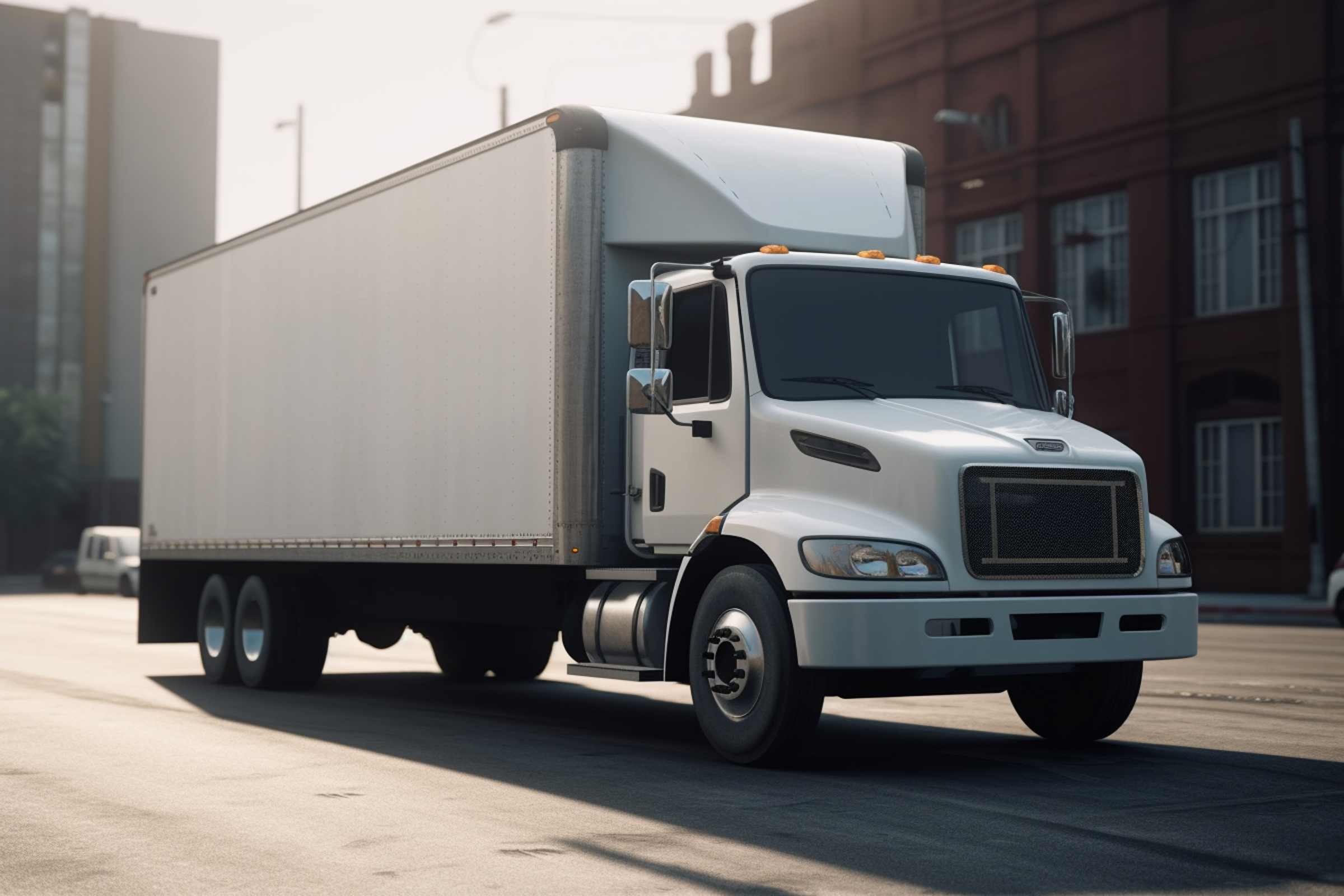
TL;DR: Amazon opened its LTL network to any US destination this month, backed by more than 80,000 trailers and 24,000 intermodal containers. But it runs from just 26 terminals, a fraction of what Old Dominion or Saia operate, so it isn't built to out-execute incumbents on service. The real effect lands on price transparency, right as truckload rates climbing into double digits push freight back into an LTL market that's raising its own rates too.
At the SMC3 Connections conference in West Palm Beach this week, Amazon Freight's Morgan Roberts confirmed what the company had already put into a press release days earlier: Amazon's LTL service, first opened to inbound shippers moving freight into Amazon facilities in April 2025, is now available to any US destination and any size of business. The service draws on the same pool of more than80,000 trailers and 24,000 intermodal containers Amazon uses for its truckload and drayage operations. On the same stage, RXO's Jared Weisfeld and J.B. Hunt's Dave Bush both pointed to the same underlying pressure: truckload capacity is tight, rates are up, and freight is migrating back into LTL networks that weren't built to absorb it quickly.
That's the headline. It's also the least useful part of the storyfor anyone actually moving freight.
Amazon's trailer count sounds enormous next to any single carrier's fleet. But LTL isn't won on trailer count. It's won on terminal density, because every shipment gets picked up, consolidated at a local terminal, hauled, and delivered on the other end. Amazon Freight LTL runs from roughly 26 terminals. FedEx Freight and Estes Express each operate more than 300. Old Dominion and Saia run over200. That gap shapes pickup windows, transit reliability, and how many touches a pallet takes before it reaches a dock.
A large trailer pool without matching terminal density doesn't add up to a national LTL network. It produces a hub-injection model instead: efficient on the lanes it covers, thin everywhere else. Amazon's own coverage map shows strength in the Eastern US, Texas, and the West Coast, with real gaps in between. Reading Amazon's scale as a sign it can now match FedEx Freight or Old Dominion on service is reading the wrong number.
There's a second wrinkle worth flagging. Amazon frames its LTL build out as full asset ownership, with Roberts describing how the company bought its own trailers and secured the capacity to run them rather than leaning on partner carriers. Industry analysts have pushed back on that framing. Ship Matrix's Satish Jindel argues the operation looks closer to a brokerage layered over partner carriers than a true asset-based network. That distinction matters if you're evaluating Amazon as a long-term LTL partner rather than a one-off quote, since brokerage models and asset-based networks carry different risk profiles for claims handling, capacity guarantees, and service consistency.
This is the part with no workaround. Truckload contract costs are running an estimated 16% to 17% higher year over year as of this spring, driven by tightening capacity and carrier attrition. That's the exact pressure Roberts pointed to when she described shipments" moving back to LTL." But LTL isn't a soft landing. Carriers have filed general rate increases in the 4.9% to 5.9% range this year, and total LTL cost growth, once accessorials are included, is running 6% to 9% for many shippers. Average LTL shipment weight is up roughly 11% since January, which is the clearest evidence yet that Roberts is describing a real pattern and not a sales pitch.
The practical result: there's no cheap mode left to hide in. Shippers who spent the last two years defaulting to whichever mode was cheaper that quarter now need a cost model that accounts for both truckload and LTL moving in the same direction at once.
This reads like a US trucking headline, but it touches every import and export supply chain that relies on inland US legs after ocean or air arrival. Drayage from port to warehouse, cross-dock transfers, and last-mile distribution to retail partners all run through the same truckload and LTL networks Roberts and Weisfeld were describing. If your freight clears a US port and then sits waiting for a truckload slot that isn't there, or comes back with an LTL quote 8% higher than your budget assumed, the disruption started upstream of your ocean or air leg, not on it.
A few moves are worth making before this quarter's routing guide goes stale. Pull current shipment weight data and check whether more freight is naturally splitting toward LTL breakpoints; if average weights are drifting the way the broader market's are, your mode mix should be shifting with it. Get an instant Amazon LTL quote on are presentative lane even without a plan to switch; a live benchmark is useful leverage in your next carrier negotiation regardless of who you book with. And if any of your US-bound freight touches Amazon's covered corridors — the East, Texas, or West Coast — weigh whether a blended truckload-LTL strategy on those specific lanes beats a single-mode default.
The freight that gets caught out here won't be the freight nobody planned for. It'll be the freight still routed the way it was twelve months ago.
Source:https://www.joc.com/article/amazon-freight-says-truckload-freight-moving-to-ltl-6245023