In June 2026, U.S. ports handled more import volume than they're forecast to handle in any single month for the rest of the year. The National Retail Federation's Global Port Tracker put June at 2.25million TEU, up 14.3% year over year, then projected declines straight through September. For an industry used to peak season landing in August or September, that's an odd thing to read in June.
This H2 2026 freight forecast looks at why. Four separate forcesare converging on the same six months: an early peak, a pair ofstacked cost increases, a capacity swing tied to the Red Sea, andearly signs of an oversupply correction. Here's what each one meansfor how you plan the rest of the year.
Retailers didn't wait for August this year. The National Retail Federation and Hackett Associates, who jointly produce the monthly Global Port Tracker, reported June import volume at 2.25 million TEU, a 14.3% jump from June 2025. Some of that gain reflects a weak comparison month a year earlier, but the bigger driver is straightforward: shippers moved goods earlier to get ahead of rising fuel costs and tariff uncertainty later in the year.
The catch is what comes next. The same forecast has July down 8.4%year over year, August down 8.6%, and September down 2.2%, before October flattens out close to last year's level. If you run procurement or logistics for a mid-size operation, that shape matters more than the headline number. A quiet September doesn't mean a quietQ4. It means demand got moved earlier, and the usual scramble for space and rates before the holidays could still show up, just on a different calendar than you're used to.
Booking Q4 capacity commitments now, while the market still feelscalm, is a cheaper move than waiting for the October numbers toconfirm what the forecast already shows.
Two different cost increases landed on shippers in the same month, and it's worth knowing they're not the same problem. The first is a straightforward rate increase. In a single week in June, transpacific spot rates jumped more than 50% to roughly $4,800 per FEU on the West Coast and 25% to about $6,300 per FEU on the East Coast, according to Freightos. That's demand pulling rates up, the same frontloading behavior driving the early peak.
The second is a fuel surcharge increase, and it has a different cause entirely. Freightos reports that many contracted shippers are facing an 80% jump in their fuel surcharge when carriers reset the quarterly Bunker Adjustment Factor in July. That's tied to fuel cost, not cargo demand, and it hits even shippers who locked in favorable base rates months ago.
The practical takeaway: if your finance team is only watching the line item labeled "freight rate," you're missing half the increase. Ask your carrier or forwarding partner to break out base rate and fuel surcharge separately on every invoice this quarter. One of those numbers will likely soften once the early peak passes. The other won't, not until fuel prices do.
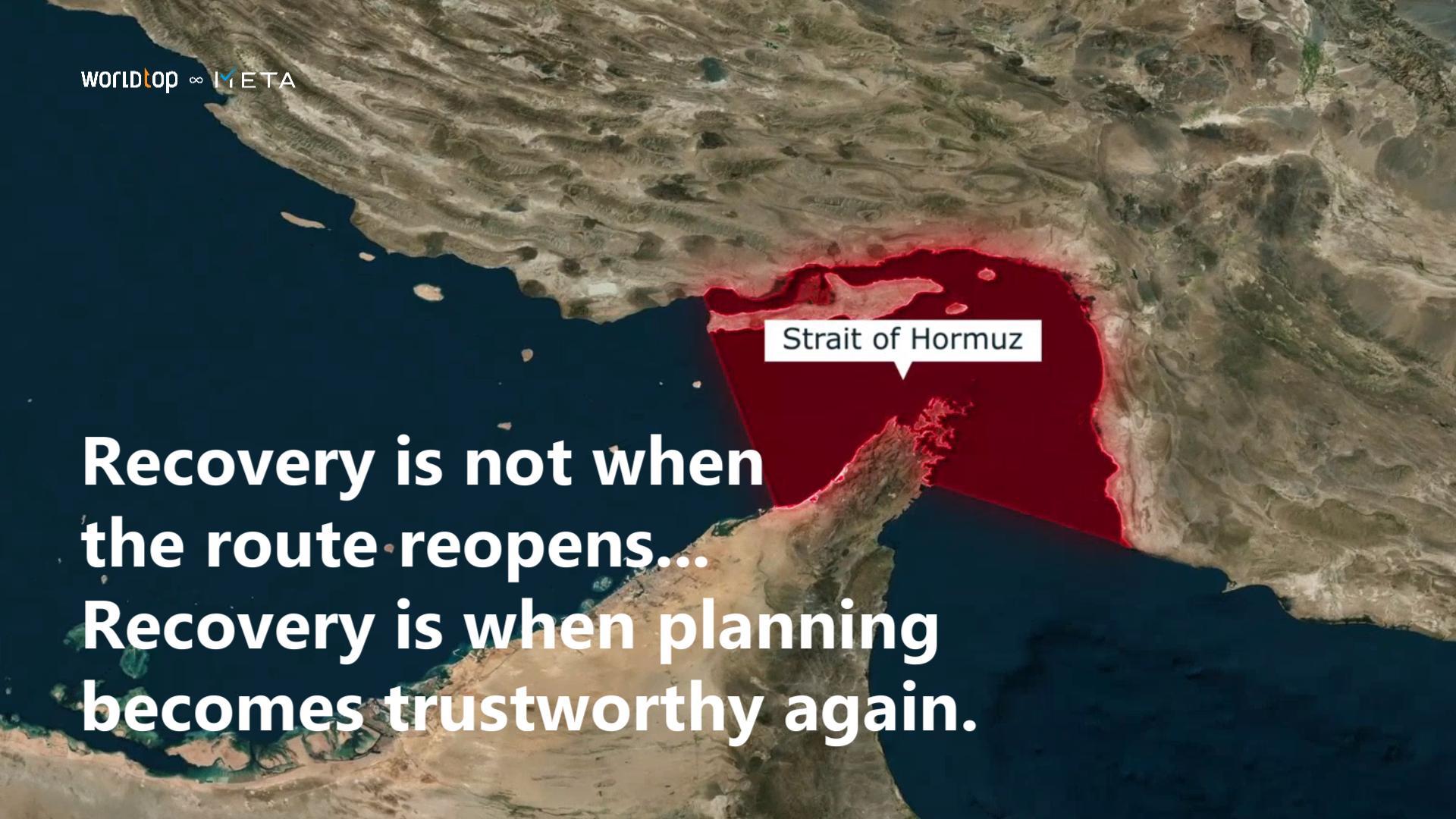
For nearly two years, container ships avoiding the Red Sea have sailed the long way around Africa, a detour that has quietly absorbed7% to 8% of global shipping capacity. Carriers are now returning to those routes in stages through 2026. Drewry estimates that a full, fast return to the Suez Canal could push contract rates down 30% to35%, simply because all that absorbed capacity comes back onto the water at once.
That sounds like good news for anyone paying ocean freight bills, and eventually it probably is. But the transition itself is the part worth planning for, not the destination. A sudden return creates congestion at the European hubs that have to absorb the schedule changes, plus a short window where rates can move sharply in either direction before the market settles. Carriers know this, which is part of why the return has been gradual rather than immediate.
This is exactly the kind of stretch where having both an air and asea option matters more than usual. When ocean schedules wobble during a transition like this, shifting time-sensitive cargo to air, even temporarily, can be the difference between a delay and a missed delivery window. If your current routing is single-mode, H2 2026 is a reasonable moment to price out a backup — part of why Worldtop &Meta runs air and sea as one coordinated service rather than two separate ones.
In February 2026, Maersk announced it would cut 1,000 corporate roles, about 15% of its corporate workforce, while bracing for a rate slump tied to the Red Sea reopening and a wave of new vessel capacity entering the market. CEO Vincent Clerc told investors the company expects rates to "develop adversely" through the year, with overcapacity in the 4% to 8% range.
That single data point fits a pattern bigger than one carrier's earnings call. Analysts at Xeneta project the global container fleet growing around 3.6% in 2026 against demand growth of roughly 3%, a gap that's small on paper but enough to put sustained downward pressure on rates once it compounds across a full year.
Most of the H2 conversation so far has focused on spikes: tariffs, surcharges, an early peak. The quieter risk is the opposite problem. If carriers are cutting headcount and analysts are calling 2026 a structural downcycle, the negotiating leverage in H2 may sit with shippers, not carriers, for the first time in a while. Worth testing that at your next contract renewal rather than assuming last year's rates are this year's floor.
Worldtop & Meta is a freight forwarding company specializing in air and sea freight across Asia, North America, and Europe, and the view from inside daily bookings looks a little different than the analyst reports.
The shippers who come out ahead in a year like this aren't the ones who guess right about which risk hits first. They're the ones who've built enough flexibility into their routing and their contracts that it doesn't matter which one does.
A gradual Red Sea return sounds stable until you're the one stuck mid-transition. We'd rather a client have an air option priced and ready before they need it, not after.
Why did peak shipping season move to June in 2026? Retailers frontloaded orders to get ahead of rising fuel costs and tariff uncertainty later in the year, pulling the forecasted 2026peak-import month up from its usual August or September slot to June, with declines projected through September.
Are ocean freight rates going up or down in the second half of 2026? Both, depending on the driver. Demand-driven spikes from the early peak should ease as 2026 progresses, but the fuel surcharge increase taking effect in July is tied to fuel costs, not cargo volume, and is likely to persist on a separate timeline from the rate cycle.
What does the Red Sea reopening mean for shipping costs? A full return to Suez Canal routing could lower contract rates by 30%to 35%, according to Drewry, by releasing the 7% to 8% of global capacity currently absorbed by the longer route around Africa. The transition period itself, though, risks short-term congestion and rate volatility before that benefit shows up.
Is the freight market facing overcapacity in 2026? Multiple analysts, including Xeneta, project the global container fleet growing faster than cargo demand in 2026. Maersk's decision to cut 1,000 corporate roles in February 2026, citing an expected rate slump, is one concrete signal of that broader trend.
How can a small business manage unpredictable freight costs in H2 2026? Ask for separated rate and surcharge line items, build a few extra days of buffer into Q3 and Q4 shipment timelines, and get a comparison quote for air freight on your most time-sensitive items so you're not negotiating from scratch if ocean schedules slip during the Red Sea transition.
H2 2026 isn't shaping up as one disruption to plan around. It's four: an early peak that's already past its headline number, a pair of cost increases with different root causes, a capacity swing tied to how fast carriers return to the Red Sea, and early signals that oversupply, not another spike, may define the back half of the year. None of these are reasons to panic. They're reasons to build a little more flexibility into your routing and your contracts than you needed last year. If you want a second set of eyes on how your current shipping strategy holds up against these four forces, Worldtop &Meta's team is glad to walk through it with you.